
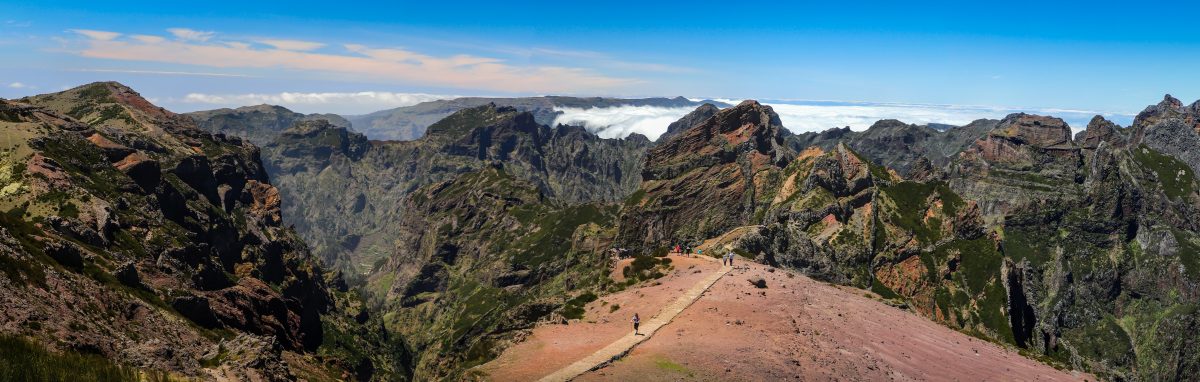
Madeira is a unique island of volcanic origin, which, thanks to its pleasant climate—with temperatures between approx. 15–25°C for most of the year—earned the nickname Island of Eternal Spring. This small piece of the Atlantic Ocean offers breathtaking nature, dramatic cliffs, deep forests, green levadas, as well as cultural monuments and hidden treasures that tourists often overlook. For me, Madeira is one of the TOP European vacation spots. Let’s discover them all together.
Continue reading “Madeira: 25 tips on what to see and do”Category: Mountain crossings
Mountain crossings and ranges, how to lighten your backpack – ultralight, maps, camping, food for the mountains
Vacation in Austria: hidden lakes, via ferratas, and gorges – 20 tips on what to see
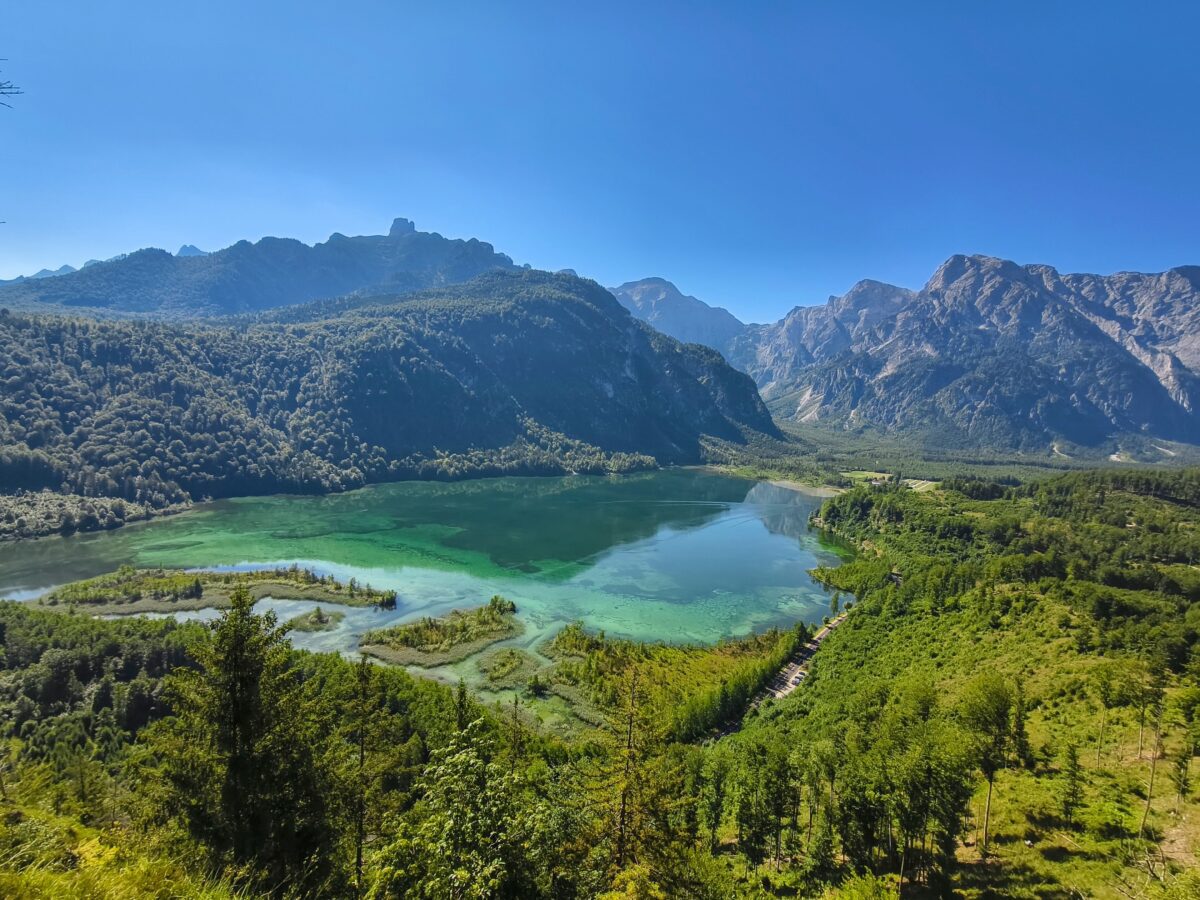
Most people know Austria as a place of beautiful lakes like Wolfgangsee, Attersee, or Lake Constance. But trust me – this Alpine country has much more to offer. Alongside famous destinations, there are quiet corners, hidden via ferratas, majestic castles, and spots where it’s just you and the mountains.
In this article, we’ll look at more than 20 tips for your vacation, combining well-known attractions with less-explored spots. If these aren’t enough, check out my map with nearly 350 tips.
Rakousko: mapa 450+ míst pro vaši dovolenou od Mišketravels
389 Kč
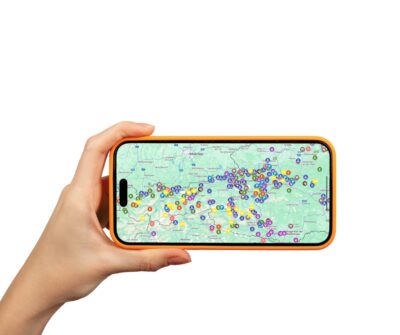
Objevte krásy Rakouska s mojí podrobnou digitální mapou, která obsahuje 450+ míst nejen v Alpách. Prozkoumejte dvanáct kategorií mapy. Je výsledkem osobních zkušeností a dlouhých měsíců strávených v horách. Perfektní pomocník pro plánování dovolené!
Hallstatt and less-visited waterfalls
Where to stay in Hallstatt?
Finding accommodation directly in Hallstatt at a normal price is a challenge. It’s a UNESCO site, so prices will simply be higher. For example, Fenix Hall Boutique is one of the more affordable yet still nice options. However, I recommend staying outside Hallstatt but still by the lake, for example at Metzgerwirt Vieh Heli.
What to see nearby?
Hallstatt needs no introduction – the view of pastel houses by the lake is all over Instagram. But just outside the village, you’ll find the lesser-known Waldbachstrub Wasserfall, where you’ll encounter very few people. It’s not an ultra-giant waterfall, but it’s a nice walk and you can do a loop with a view of Lake Hallstattersee.
- Tip: There are fewer tourists in the morning and the sun beautifully illuminates the mist over the waterfall; we met so few people in the morning that we could count them on one hand.
- Route: 3 km round trip from the parking lot, but you can also do a loop for the lake view.
- Elevation gain: approx. 200 m
- Difficulty: easy, suitable for children and seniors
Ameisstein – a view of a beautiful lake without the crowds
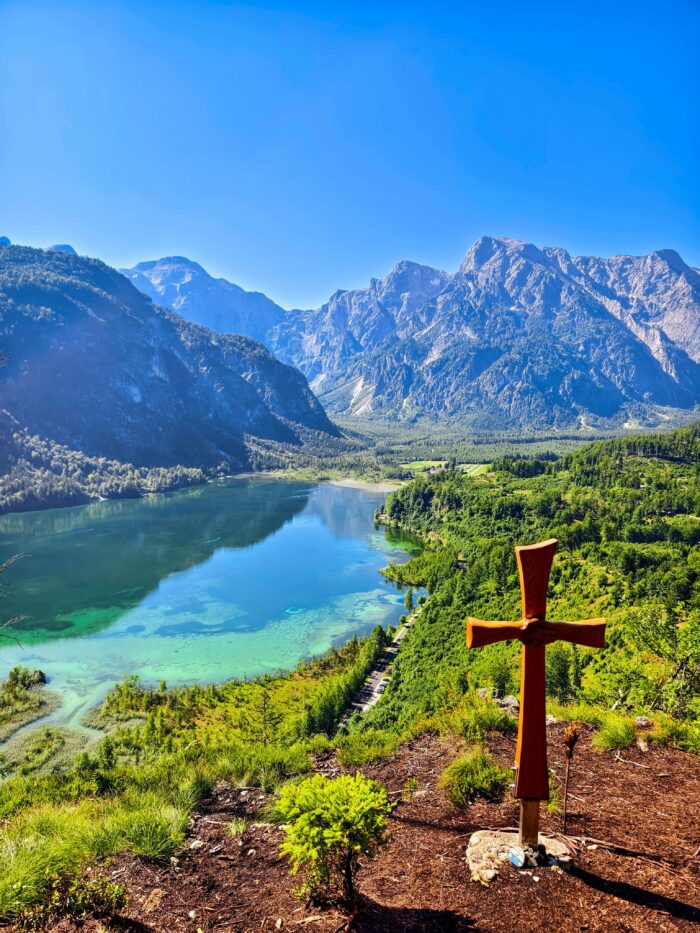
Forget overcrowded viewpoints – Ameisstein above Lake Almsee offers a magnificent panorama. Plus, you can sleep in your car by the lake, and you’ll find beautiful romantic swings along the way.
- Difficulty: easy – moderate
- Route length: 5 km loop
- Elevation gain: 320 m
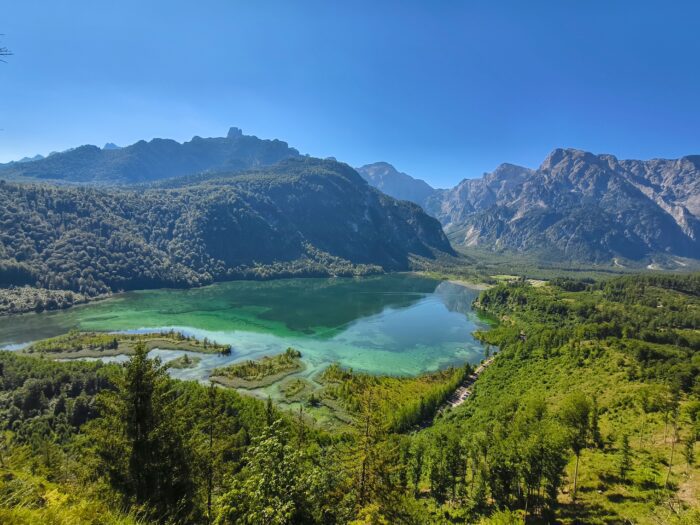
Kleiner Ödsee – mountain swimming
This small lake in the Totes Gebirge has turquoise water and a mountain backdrop; you can take a pleasant loop around other nearby lakes. You won’t be completely alone on hot days, but you don’t have to worry about big crowds either, and you can combine the trip with the previous tip.
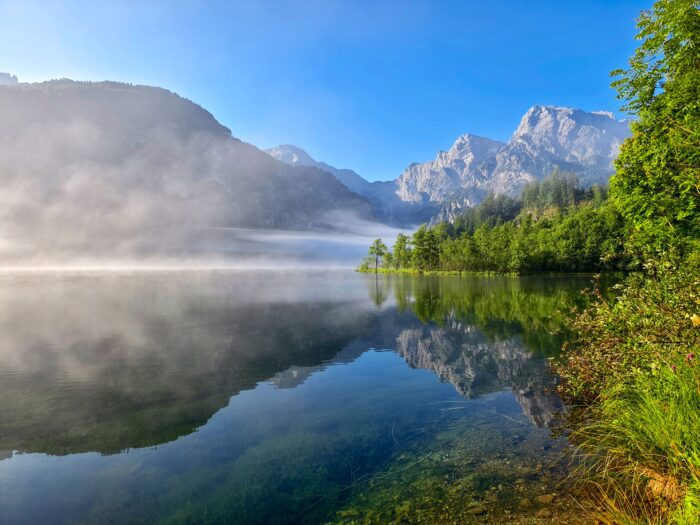
Traunfall – a forgotten waterfall on the way to the lakes
Traunfall isn’t just one waterfall – it’s a cascade of water steps where the river plunges sharply through narrow rocky gorges.
- Access: parking right by the viewpoint, a short path leads to the waterfalls
- Waterfall height: around 12 m
- Cascade length: several hundred meters
Canyoning and rafting
Powered by GetYourGuide
Schafberg – a panorama of four lakes
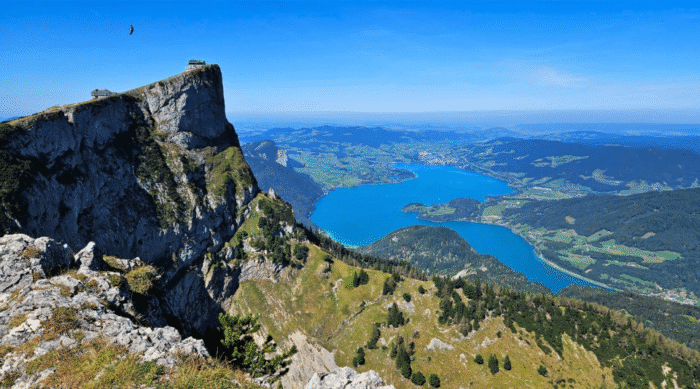
One of the most iconic mountains in the Salzkammergut, like an Austrian Seceda. In good weather, you can see not only Wolfgangsee, but also Mondsee, Attersee, and Traunsee. You can choose:
- On foot: from St. Wolfgang, 17 km, moderate – difficult
- Cog railway: price approx. €45 round trip, takes 35 minutes
where to stay nearby?
The highly-rated Grafbauer is an ideal choice around Wolfgangsee.
Schrecksee
For me, one of the most beautiful Austrian lakes. On this trek, you have a choice: either save money and take the more difficult red trail from Tannheim—you probably won’t manage the loop around all the lakes in one day, but the main highlight is Schrecksee, which will simply blow your mind.
Or you can pay 8 euros for the toll road and parking and do a 19 km loop around the lakes (Elevation gain approx. 1,200 m). Note: you can only enter the parking lot until 8:00 AM and leave no earlier than 5:00 PM! Cash only.
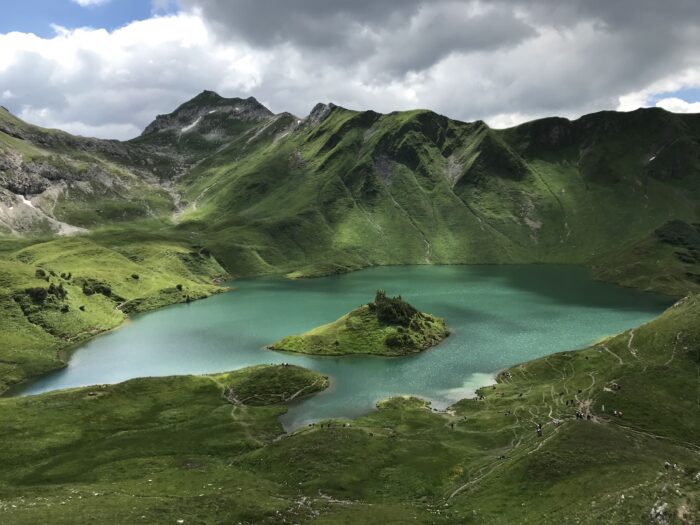
Gosausee – the mirror of Dachstein
When the Dachstein mountains reflect in the surface of Gosausee, it’s a sight you won’t forget. You can also combine it with a visit to the nearby Hinterer Gosausee.
- Loop around the lake: 4.5 km or a 13 km loop including the back lake
- Difficulty: easy
Where to stay nearby?
A highly-rated apartment at a reasonable price. There’s also a wellness area in the building, which is always nice after a hike.
Drachenwand & Intersport Via Ferrata
Some of the most famous via ferratas in Austria, but they are truly worth it. You’ll find the Intersport one right by Gosausee.
Tip: If you want to avoid the crowds, go in the late afternoon when you’ll have the ferratas almost to yourself. Just be careful during the descent; plan it so you’re walking while it’s still light. Equipment rental is available at Intersport in Mondsee.
- Length: 400 m
- Elevation gain: approx. 300 m
- Difficulty: C/D – for experienced climbers
In my map, you’ll find another 25 tips for via ferratas that are worth it during your vacation in Austria.
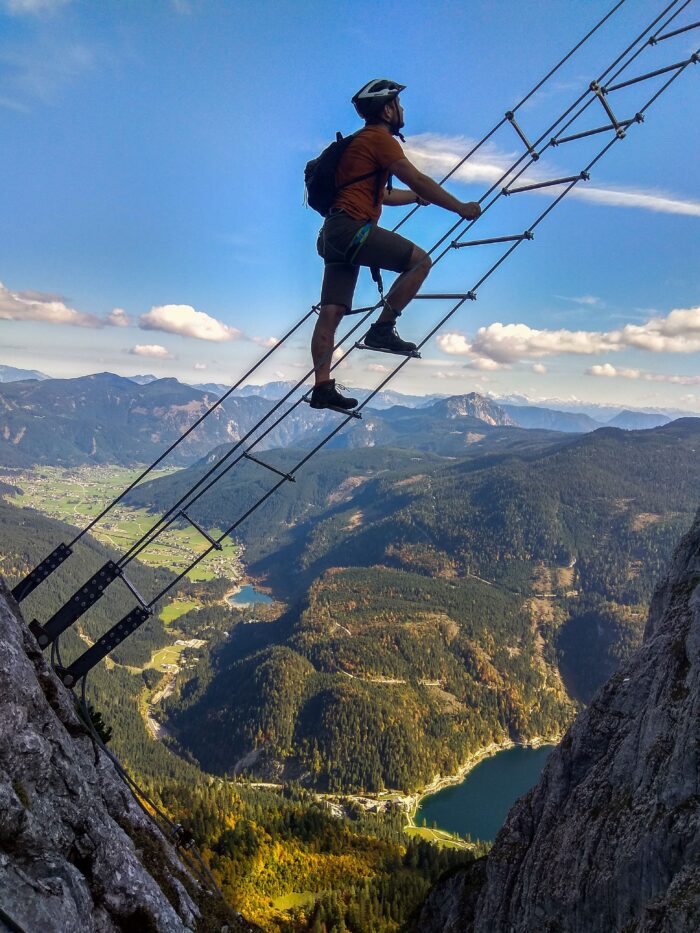
Ötschergräben – the Austrian Grand Canyon
This gorge in Lower Austria has earned the nickname “Austrian Grand Canyon” thanks to its steep walls, wild river, and waterfalls lining the route. It’s a paradise for nature lovers who want adventure without extreme effort.
- Tip: It’s best to take the Ötscherhias – Mira Waterfall – Lassingfall route and back, as it combines the most beautiful sections and avoids long returns on asphalt.
- Route length: 9.8 km
- Elevation gain: 419 m
Ötzi’s Cairn
In the Ötztal Valley, you can commemorate the famous iceman, Ötzi. It’s a beautiful trail with breathtaking views of glaciers.
Route: 23 km, 1,300 m elevation gain
Thermal baths Bad Ischl
Where to stay in Bad Ischl: Get away in Bad Ischl offers pleasant accommodation at a friendly price. Bad Ischl combines spa elegance and relaxation. Try the outdoor pools with mountain views at sunset – an atmosphere straight out of a movie.
Hohenwerfen Castle with eagle show
The Gothic castle above the Salzach Valley is like something out of a fairy tale; plus, it’s a center for falconry.
- Tip: Ideal to combine with a visit to Eisriesenwelt.
- Admission: approx. €16 per adult
- Bird of prey show: 11:15 AM and 3:15 PM
Highline 179 – a bridge between mountains
Near Reutte stands the Highline 179 suspension bridge, connecting Ehrenberg Castle and Fort Claudia.
- Bridge length: 406 m
- Height: 114 m above the valley
- Admission: €8 per adult
Tip: It sways a lot in the wind – not for everyone, but the view is unforgettable.
Liechtensteinklamm Gorge
One of the longest and deepest gorges in the Alps. Definitely more crowd-friendly than the Bärenschützklamm.
- Trail length: 1.5 km
- Elevation gain: minimal
- Tip: Bring a waterproof jacket – water sprays everywhere here.
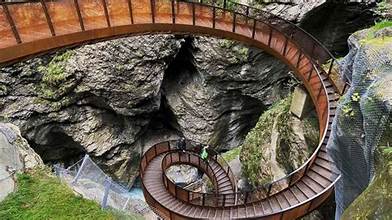
Gollinger Wasserfall
Smaller than Krimml, but more picturesque and less crowded.
- Height: 75 m
- Access: 10-minute walk from the parking lot
- Tip: Ideal to combine with a tour of the town of Golling.
As mentioned, Austria isn’t just about the famous lakes. It was hard to choose from the 350 tips on my map. So if these weren’t enough, go check it out.
Rakousko + Slovinsko: výhodný balíček map
Original price was: 548 Kč.489 KčCurrent price is: 489 Kč.
FAQ
Kde seženu dálniční známku pro Rakousko?
An Austrian highway vignette can be purchased:
Electronically via apps – e.g., Waze, eDalnice, or certain travel portals.
Online – on the official ASFINAG website; it’s valid immediately if you choose a business purchase, or after 18 days if you buy as a private individual (due to consumer withdrawal rights).
At gas stations – near the border or directly after entering Austria.
Watch out for unreliable portals where the price can be double.
Jak je to s kempováním v Rakousku?
Wild camping and overnight stays in a tent outside designated campsites are mostly prohibited in Austria.
Tip: If you sleep in your car in a parking lot, check the traffic signs – overnight stays are often explicitly forbidden.
In some federal states (e.g., Tyrol, Salzburg), fines can reach up to €500. Only emergency bivouacking above the tree line is legal in some areas, while in others it’s permitted. Navigating camping laws in Austria isn’t exactly simple.
Legal options: official campsites, motorhome stopovers (Stellplatz), or “Bauernhof camping” (on farms).
Je potřeba mít v Rakousku hotovost, nebo všude berou karty?
In most cities, tourist attractions, and restaurants, you can pay by card (Visa, Mastercard), but smaller mountain huts, family guesthouses, or parking lots often require cash in euros.
Pamir Trail through Tajikistan: A newcomer among long-distance treks
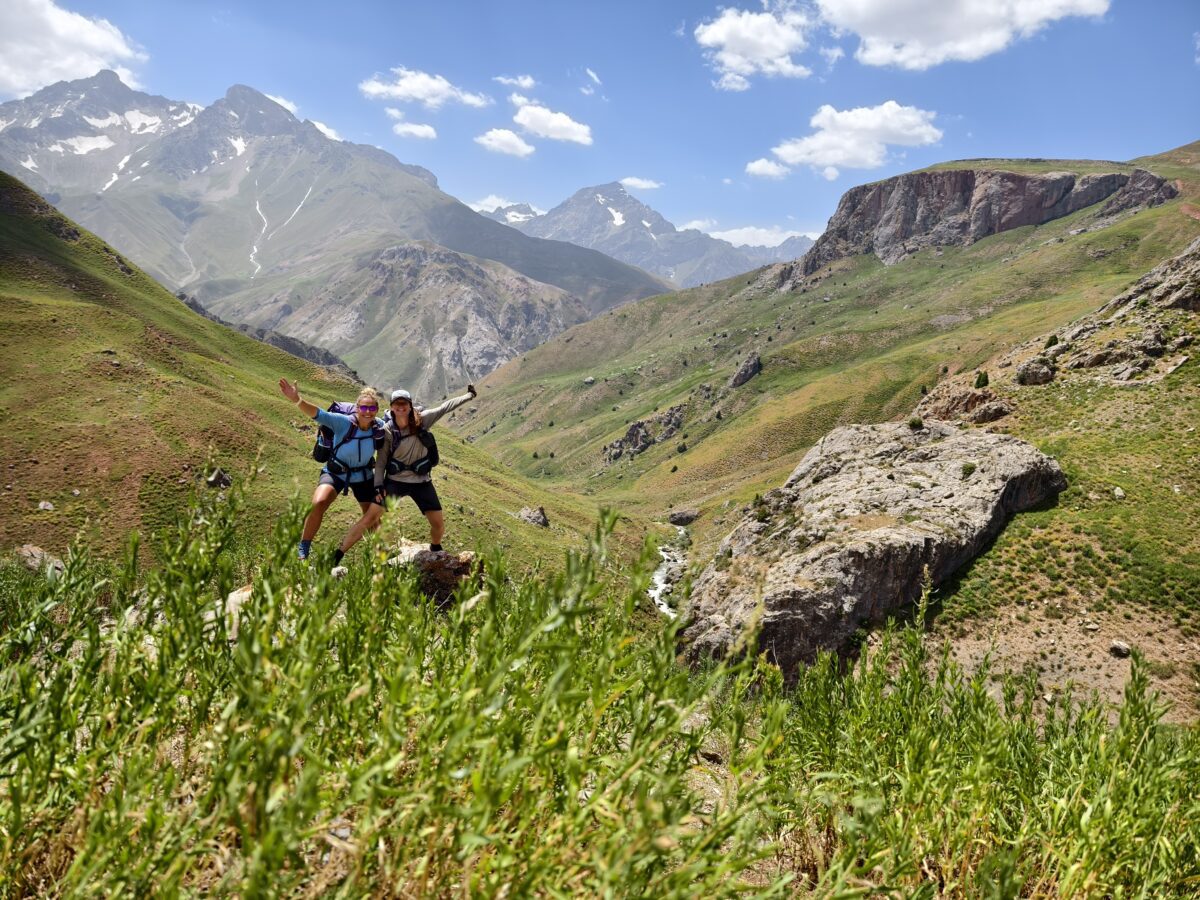
Pamír trail vznikal teprve posledních pár let a do nedávna stále nebyl dokončený. V létě 24 jsme ho s parťačkou Martinou Merisi prošly jako první na světě a ustanovily tak jeho trasu. Jaké to bylo a na co si dávat pozor, pokud byste se na něj taky vydali?
Continue reading “Pamir Trail through Tajikistan: A newcomer among long-distance treks”La Gomera: 25 tips on what to see and do
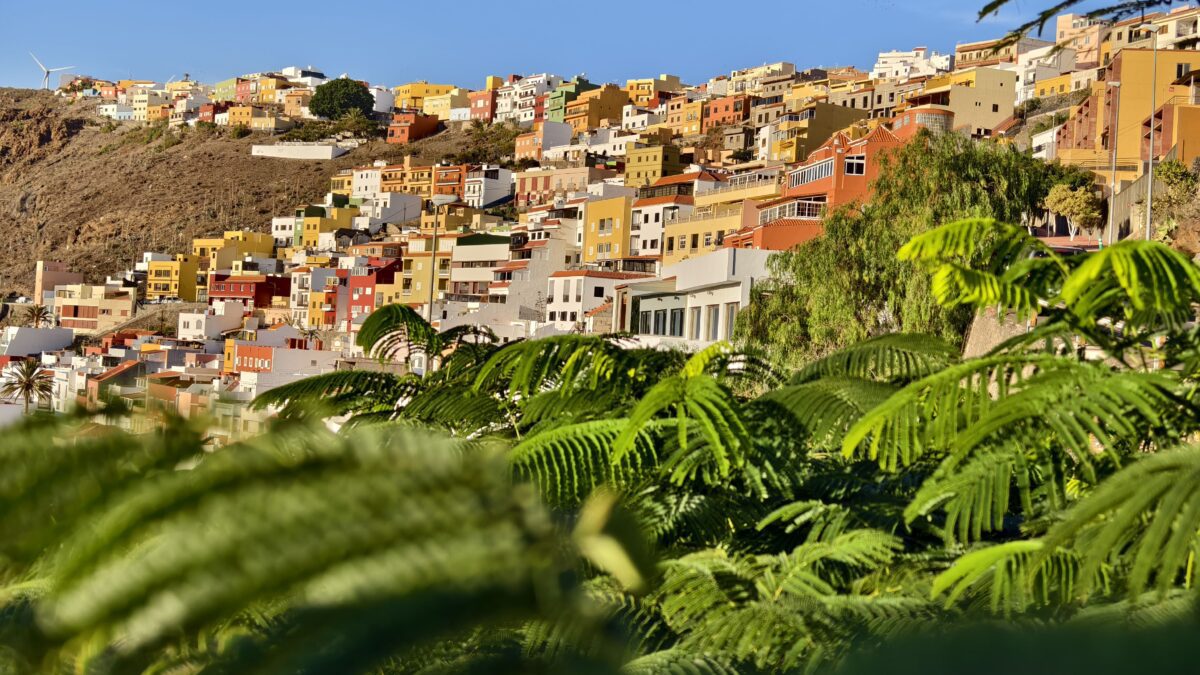
La Gomera is one of the most beautiful and at the same time least touristy Canary Islands. If you are looking for authentic nature, wild mountains, misty forests, and quiet villages, La Gomera is the ideal destination. This island is known for its historical connections to Christopher Columbus, incredible viewpoints, and the unique language silbo gomero. It is an absolutely perfect escape from the crowds of tourists on Tenerife.
If you are escaping from Tenerife, you might also find my article about it useful: 30 tips on what to see and do. I have also prepared interesting places to see and things to experience on La Gomera! If those aren’t enough, I have more locations in my map along with plenty of spots on Tenerife.
How to get to La Gomera?
Ferry: The best way to get to the island is by ferry from Tenerife (Los Cristianos).
Boat transport between the islands is provided by two ferry companies. I recommend searching on Direct Ferries, which will give you all the available options.
- Fred Olsen Express – the journey takes 50 minutes.
- Naviera Armas – a slightly slower but cheaper option.
Car: If you want to explore the island well, I recommend renting a car directly at the port of San Sebastián. Compare the cheapest options here.
For flights I prefer searching on Skyscanner. have better prices than the carriers themselves. You can find out how to get cheap flights in this article.
Where to stay on La Gomera
We mostly camped, but in San Sebastian we used the quiet Hotel Villa Gomera. On the other side of the island, I recommend Casa La Alameda.
What to see and do on La Gomera?
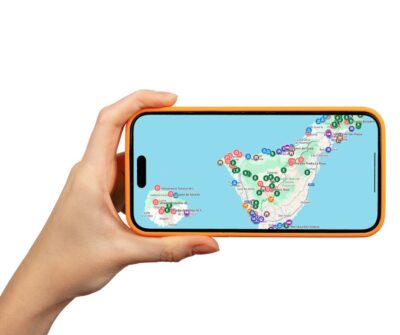
La Gomera: 25 tips on what to see and do
249 Kč
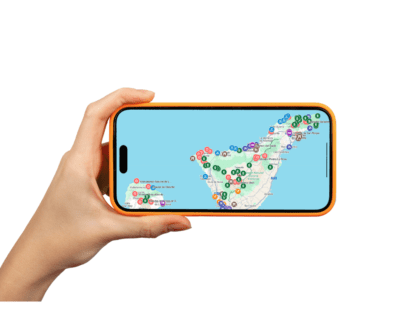
Discover the beauty of the Canary Islands – Tenerife and La Gomera with my detailed digital map featuring 180+ spots across these diverse islands. Explore nine map categories. The perfect holiday planning companion!
Garajonay – a magical misty forest and the island’s highest peak
The heart of the island is Garajonay National Park, which is among the best-preserved laurel forests in the world. Thanks to the constant humidity and mists, ancient moss-covered trees grow here, creating a magical atmosphere. I recommend going early in the morning; otherwise, the viewpoints are often shrouded in fog.
What to see and do here?
- Pico de Garajonay (1,487 m) – the island’s highest peak with a fantastic view of Tenerife, La Palma, and El Hierro.
- Sendero El Cedro – one of the most beautiful hiking trails leading through forests, waterfalls, and mountain streams.
- Mirador El Rejo – a viewpoint with a breathtaking panorama of the island.
Several marked hiking trails lead through the park – most are easy to moderate and ideal for hiking trips. You can find the best ones in my map of Tenerife and La Gomera.
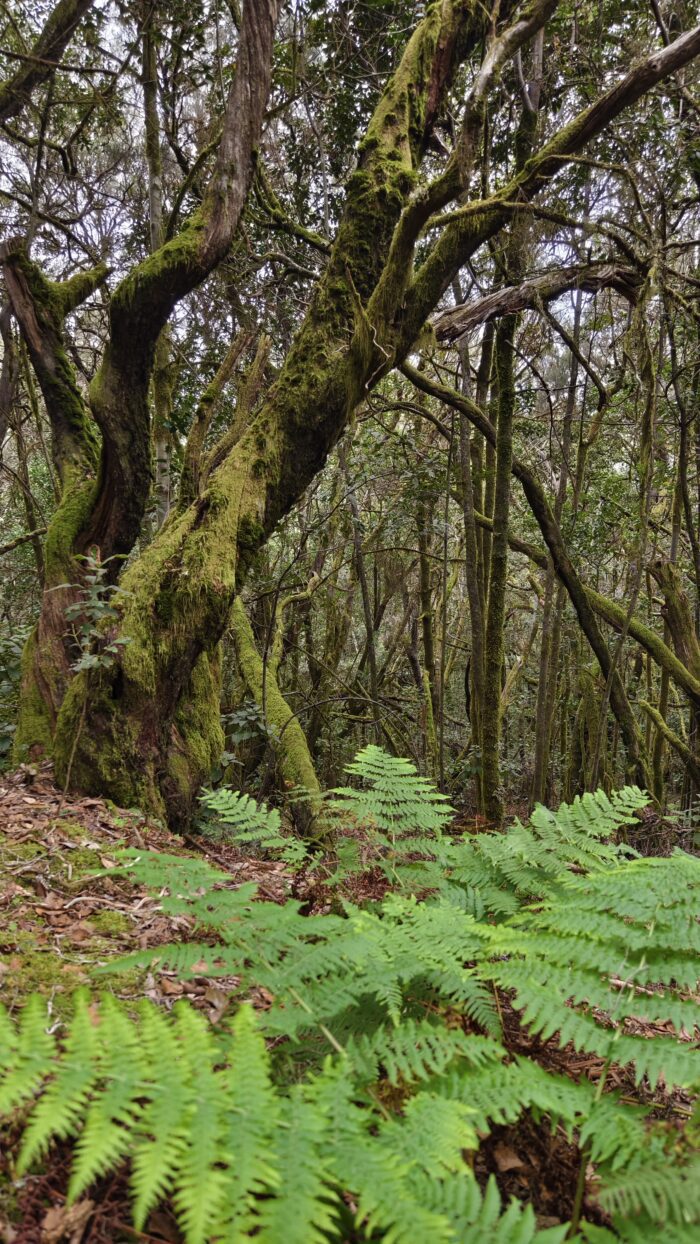
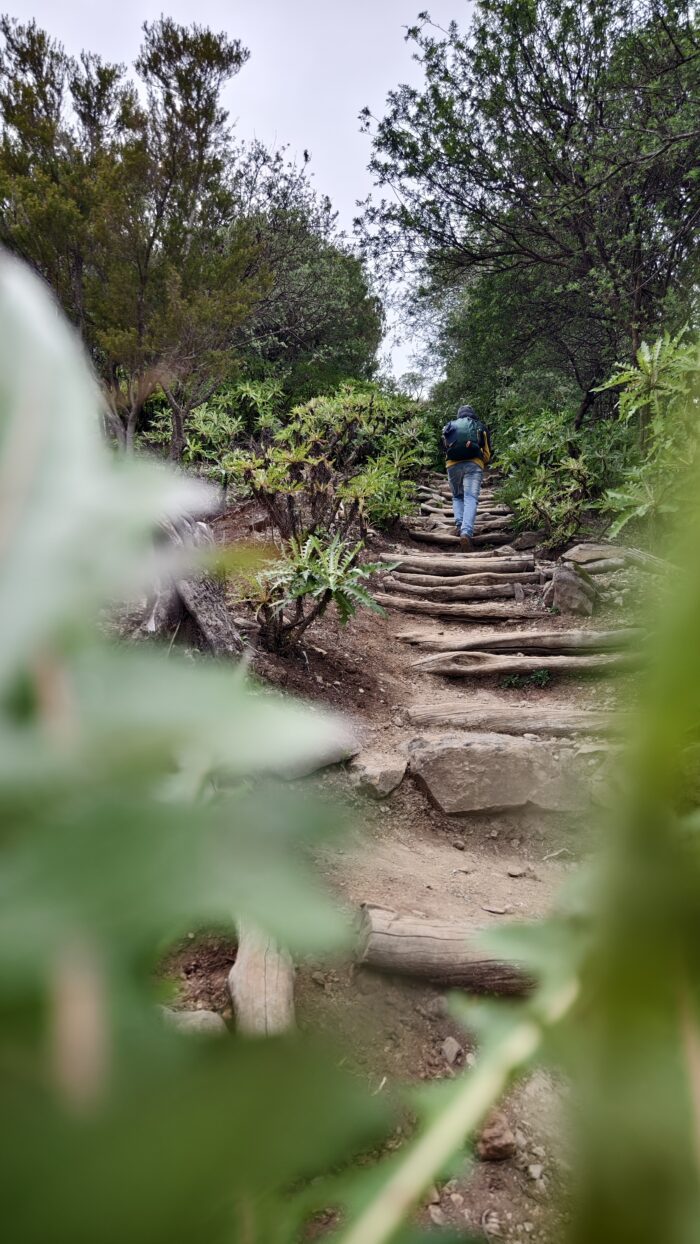
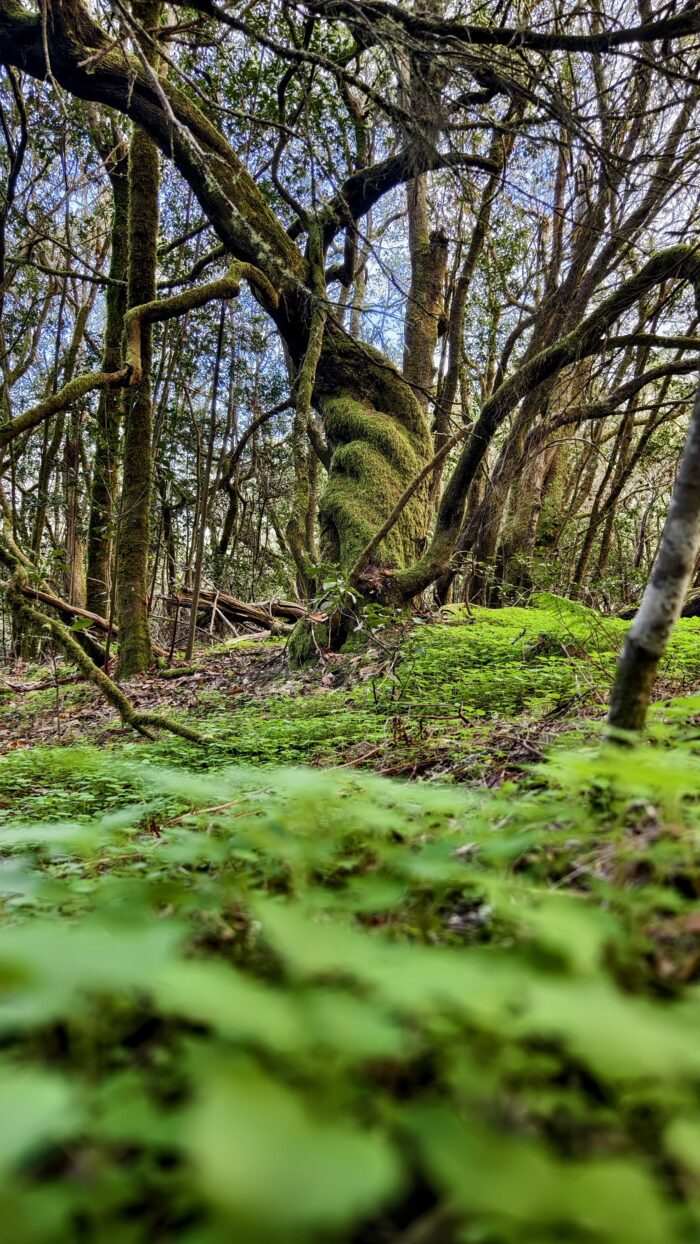
Roque de Agando – the island’s iconic rock
This monumental volcanic monolith is one of the most famous symbols of La Gomera. It is located in the middle of a mountainous landscape and offers amazing views of the entire island.
The best view of Roque de Agando is from Mirador de los Roques. An ideal spot for sunrise photography!
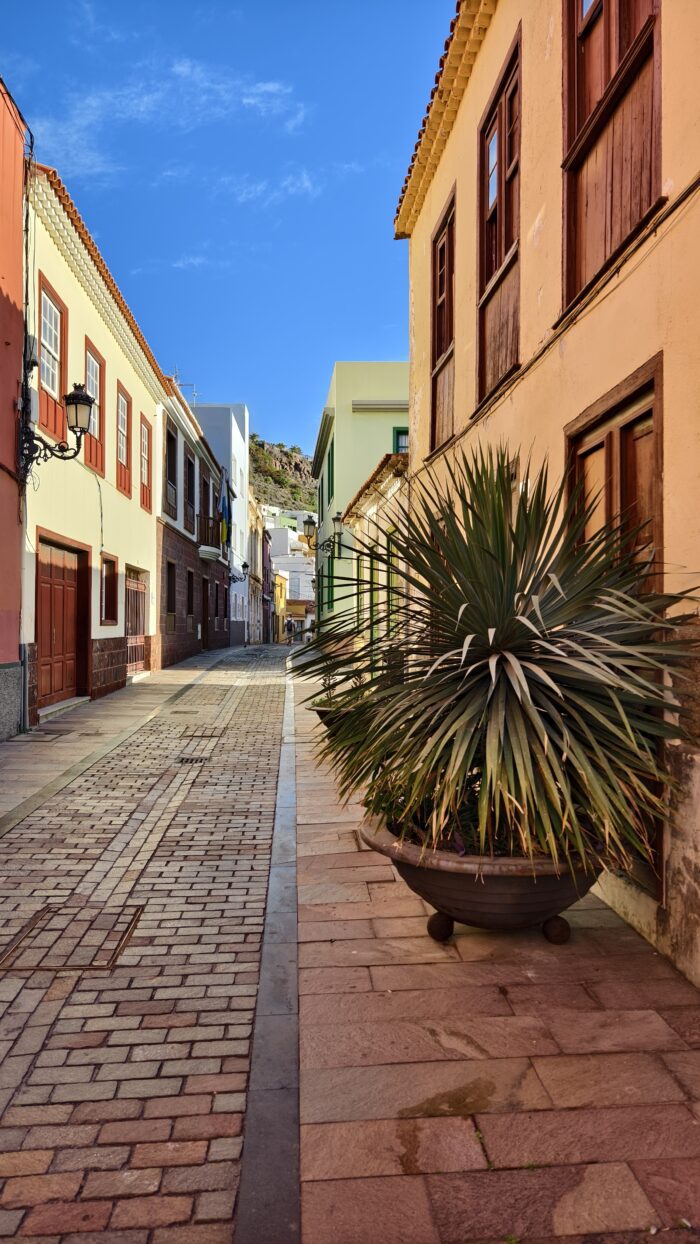
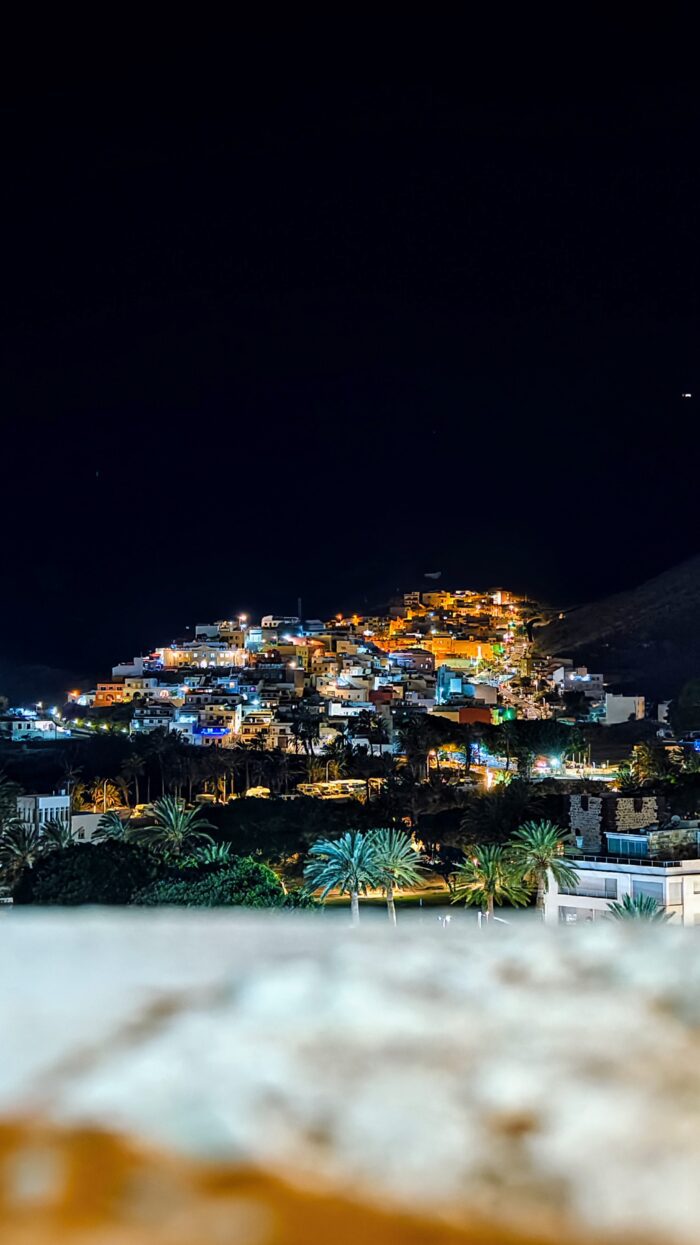
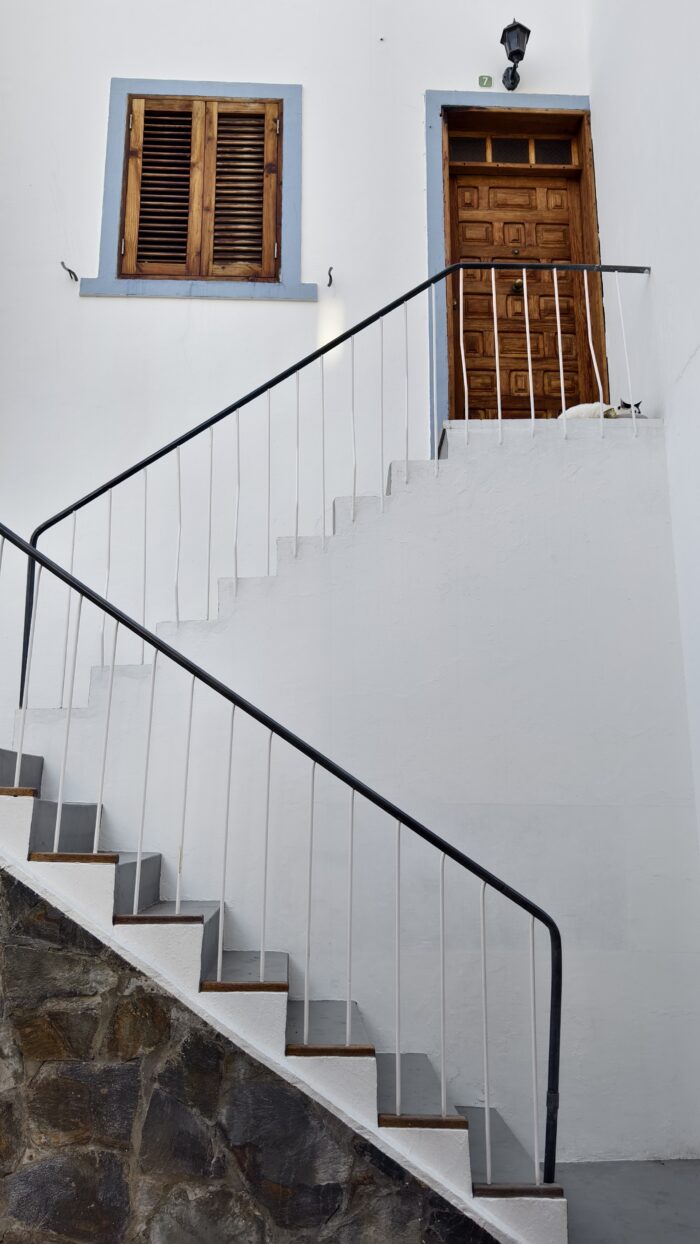
San Sebastián de La Gomera – the town where Columbus anchored
San Sebastián is the capital of La Gomera and the place where Christopher Columbus stopped on his voyage to America in 1492.
Most interesting sights
- Torre del Conde – a 15th-century fortress, the oldest building on the island.
- Iglesia de la Asunción – the church where Columbus allegedly attended the last mass before setting sail.
- Columbus House (Casa de Colón) – a museum dedicated to Columbus’s voyages and the history of the island.
The port in San Sebastián is the main entry point to the island – this is where the ferries from Tenerife arrive.
Mirador de Abrante – a glass viewpoint over the ocean
This glass platform literally hangs over the cliff. It makes you feel like you are floating above the ocean. The viewpoint is a short distance from the village of Agulo, which is one of the most beautiful on the island.
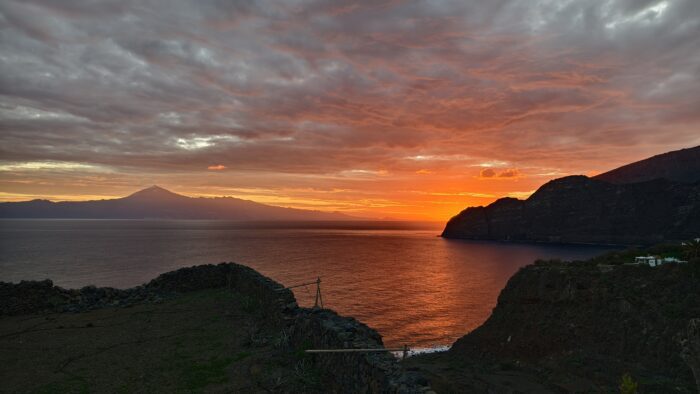
Valle Gran Rey – allegedly the most beautiful valley in La Gomera
Valle Gran Rey is the best place on the island for relaxation and swimming. This valley was previously popular with hippies and still maintains a laid-back atmosphere today.
What to experience here?
Playa del Inglés – a beautiful volcanic beach with a wild atmosphere.
Unforgettable sunsets – the best view is from the coastal promenade.
Dolphin and whale watching – local boats offer eco-friendly trips to see marine mammals.
Hermigua – forgotten plantations and natural pools
Hermigua is an agricultural area where bananas, avocados, and sugar cane are grown. In addition, you will find beautiful natural pools here.
Piscina Natural de Hermigua – a natural pool protected from the Atlantic waves.
Pescante de Hermigua natural bridge – a historical structure that once served for loading bananas onto ships.
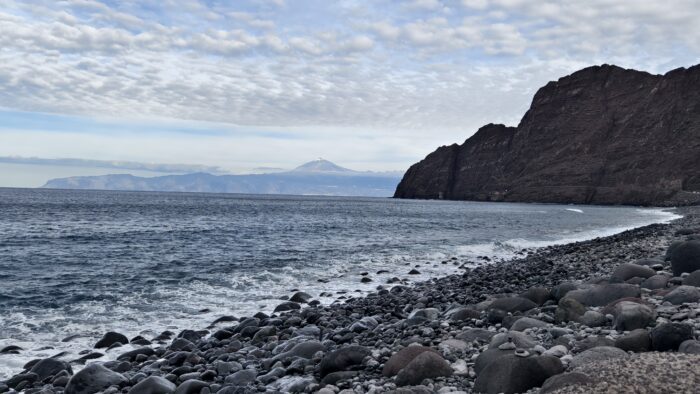
Fortaleza de Chipude – the mystical mountain of the ancient Guanches
This table mountain was once a sacred site for the Guanches, the original inhabitants of the Canary Islands. Today, it is a popular hiking trail with a beautiful view. The hike starts in the village of Chipude and takes about 2 hours. An ideal spot for stargazing, as there is no light pollution here!
Vallehermoso – the north of La Gomera without tourists
Vallehermoso (translated as “Beautiful Valley”) is a traditional agricultural area with largely untouched nature. An ideal place for those who want to escape the crowds.
- Roque Cano – a monumental basalt rock, the dominant symbol of the valley.
- Vallehermoso – Ermita de Santa Clara – Playa de Vallehermoso route (approx. 10 km) – a beautiful trek over the mountains down to the sea.
- Monumento Natural de Los Órganos – This monumental formation resembles organ pipes carved into the rock – it is a columnar basalt formation created by volcanic activity and is accessible only from the sea, though the view of it is also great.
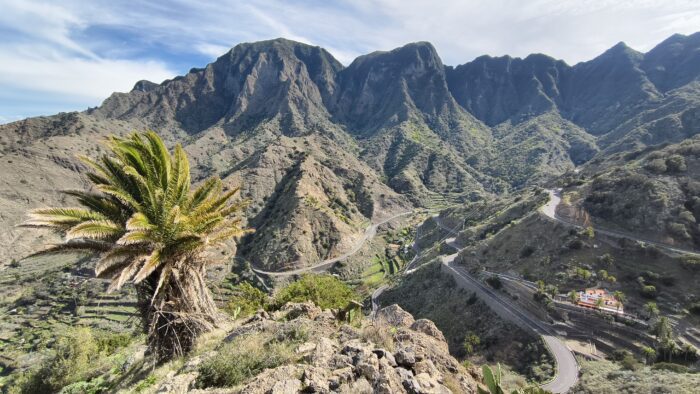
Conclusion – why visit La Gomera?
La Gomera is one of the most beautiful and authentic Canary Islands. Unlike busy Tenerife, here you will find peace, amazing nature, and a traditional atmosphere.
If you are looking for adventure, hiking, and unspoiled nature, you will love this island! If the selection wasn’t enough, get my map.
Product on sale
La Gomera: 25 tips on what to see and do
Original price was: 539 Kč.479 KčCurrent price is: 479 Kč.
A value bundle of three digital travel maps for exploring the Atlantic islands without the hassle. Clear maps of the Canary Islands, Madeira, and the Azores with marked routes, viewpoints, beaches, towns, and other tips for interesting spots.
FAQ – Frequently Asked Questions about La Gomera
How to get toLa Gomeru from Tenerife?
The best way to get to the island is by ferry from Tenerife (Los Cristianos). Boat transport between the islands is provided by two ferry companies. I recommend searching on Direct Ferries, which will give you all the available options. Naviera Armas – a slightly slower but cheaper option. Fred Olsen Express – the journey takes 50 minutes.
Do I need a car on La Gomera?
It depends on your needs; if you really want to get to know the island and don’t want to cross it on foot, I recommend renting a car. While public transport exists, connections are sparse in some places and many beautiful spots are not accessible by bus. We walked and used the bus or hitchhiked and really enjoyed it.
How difficult is hiking on La Gomera?
Hiking here is very diverse – from easy walks through Garajonay to demanding mountain treks with elevation gain. The trails are well-marked and suitable for various fitness levels.
When is the best time to visit?
La Gomera is ideal year-round, but the most pleasant conditions are from October to May. Summer can be hot in the lowlands, but the climate remains mild at higher altitudes.
Can I camp on the island?
Yes, there are designated campsites and free camping zones, for example in Garajonay National Park, but you need to obtain a permit. Wild camping outside these zones is prohibited.
Is La Gomera suitable for families with children?
Yes, but rather for families looking for nature and peace than a resort-type holiday. Hiking trails, natural pools, and cultural experiences are suitable for children who enjoy exploring.


